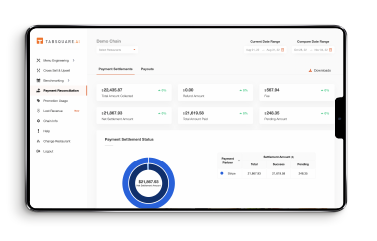
When I started working on fintech systems, mostly payment integrations and merchant settlements, I focused on what usually excites a product team: a clean UI, a smooth checkout, an instant confirmation.
I learned quickly that in payments, what matters most isn't what happens when the customer pays.
It's what happens after.
The late-night merchant complaints. The $0.03 discrepancy that becomes a support ticket. The "success" label that never shows up in the bank.
You can build a beautiful front end, but if your system can't explain where every dollar went, you're not building a product. You're building doubt.
It started with two cents
One of our merchants flagged a payout that was $0.02 short.
The cause was a rounding difference. We calculated GST on each item; their POS calculated it on the subtotal.
To us, it was explainable. To them, it was unacceptable. What they said stuck with me:
"I just want to know where my money is, and I want it to add up."
That moment changed how I think about owning a fintech product. Features matter, but what merchants buy is operational trust. And trust breaks quietly, usually somewhere between a fee calculation and a timestamp.
Reconciliation is the real product
As we scaled, reconciliation became the unglamorous core of the platform. For every transaction, we had to match:
- the customer's charge
- the gateway's authorisation and capture
- the processor's fee
- the final merchant payout
It wasn't just a technical task. It was a chain of accountability. When any link didn't line up, we saw refund requests, failed settlements and operators asking:
"Why am I getting $542.17 instead of $543?"
Whether the answer was logical didn't matter much. What mattered was whether we could:
- explain it clearly,
- trace it instantly,
- and fix it before the merchant had to ask.
That's reconciliation. That's trust.
"When do I get paid?" is the only question that matters
During one rollout, a merchant asked:
"The screen says payment successful. When exactly does the money land in my account?"
The honest answer was: never. The payment had been authorised but not captured, because of a timeout, so it would not settle. Our UI had no way to show that difference.
That was the lesson. For a product team, success is a 200 response from an API. For a merchant, success is the payout arriving in their bank.
So we rewrote how we showed transaction states:
| Before | After |
|---|---|
| "Capture pending" | "This payment is still being finalised" |
| "T+2 settlement" | "You'll receive $542.17 on Friday" |
| "Processor fee −1.8%" | "$9.83 platform fee applied" |
- Before
- "Capture pending"
- After
- "This payment is still being finalised"
- Before
- "T+2 settlement"
- After
- "You'll receive $542.17 on Friday"
- Before
- "Processor fee −1.8%"
- After
- "$9.83 platform fee applied"
Simple, human and definite.
What I started doing differently as a PM
- Built for traceability. Every transaction ID could be traced from the UI to the API, the gateway and the bank. We mapped every point where things could fail, and connected internal logs so no team was working blind.
- Set exact payout expectations. Nobody should have to decode "T+1." We built calendar-aware settlement rules, accounting for weekends and bank holidays, and showed the exact expected payout date for every transaction.
- Designed for exceptions. Refunds before settlement, partial captures, delayed payout batches. We stopped treating them as edge cases and gave them proper screens, logs and alerts, like any other core flow.
- Gave operations real tools. I worked closely with our operations team on dashboards that showed which transactions failed to settle, which merchants hadn't been paid, and what needed reprocessing or investigation.
Because a payment product doesn't end at the button. It ends at the bank statement.
Final reflection
Fintech moves fast. But the systems that win are the ones users never have to doubt.
Trust isn't built by how fast a page loads. It's built when you can say:
"Here's your exact payout. Here's when you'll get it. And here's how we got that number."
That trust lives in the logs, in the decimal points, and in tools merchants never see but rely on every day.
Now, when we build anything that touches money, I don't ask, "Does this look good?"
I ask, "Can we explain every cent?"
If we can't, we're not ready to ship.